

Commentary
Zaur Shiriyev
{
  "authors": [
    "Zaur Shiriyev"
  ],
  "type": "commentary",
  "blog": "Strategic Europe",
  "centerAffiliationAll": "",
  "centers": [
    "Carnegie Endowment for International Peace",
    "Carnegie Europe"
  ],
  "englishNewsletterAll": "",
  "nonEnglishNewsletterAll": "",
  "primaryCenter": "Carnegie Europe",
  "programAffiliation": "",
  "regions": [
    "Europe",
    "Caucasus",
    "Armenia",
    "Azerbaijan",
    "Georgia",
    "Türkiye",
    "United States"
  ],
  "topics": [
    "EU",
    "Economy",
    "Energy",
    "Trade",
    "Foreign Policy"
  ]
}
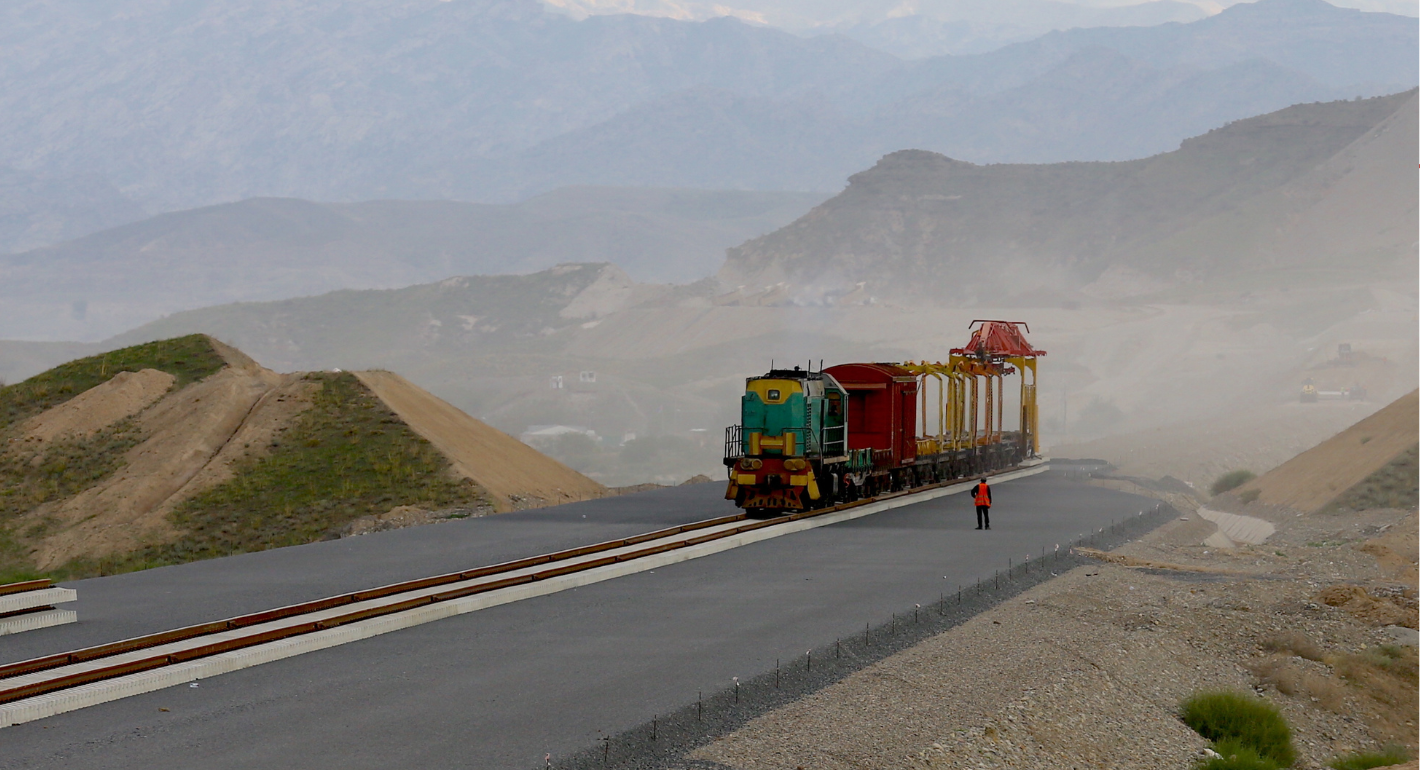
Source: Getty
The EU lacks leadership and strategic planning in the South Caucasus, while the United States is leading the charge. To secure its geopolitical interests, Brussels must invest in new connectivity for the region.
To promote the planned new Trump Route for International Peace and Prosperity (TRIPP) across the South Caucasus, U.S. Vice-President JD Vance is due to travel to Azerbaijan and Armenia for bilateral talks.
It is a high-publicity visit, which reflects U.S. ambition—and also the lack of a comparable strategic vision in Europe.
Vance’s visit carries a strong message: Connectivity has become the core geopolitical currency of the South Caucasus. TRIPP, which was named after U.S. President Donald Trump, is the centerpiece of this phenomenon. The project, which aims to build a new railway and strengthen digital and energy links, connecting the main part of Azerbaijan with its exclave of Nakhchivan via Armenia, was agreed in 2025.
Unfortunately the EU, which has far greater financial resources and expertise in the region, failed to devise its own version of TRIPP. Europe still lags behind.
Railways, roads, energy corridors, and digital links now define not only economic futures but political alignments in the region. Whoever builds and governs these networks will shape how Armenia, Azerbaijan, and their neighbors are aligned—toward United States, or toward the EU, Russia, or China.
For years, Brussels claimed to be the region’s geoeconomic anchor. But it was outflanked by Trump, who convened a trilateral summit with the Armenian and Azerbaijani leaders in the White House in August 2025, to launch TRIPP.
By contrast, the EU has produced roadmaps, declarations, and investments in projects such as Armenia’s north–south highway and other connectivity schemes. But these lack a comparable grand strategy.
“Maybe we are in a hurry, or maybe Europe is simply too passive,” one senior Azerbaijani official said in an October 2025 interview. “We lost thirty years to conflict. Now we are ready to move. But the EU behaves as if there is no clock.” The frustration is real.
Apart from limited demining support, Baku has received little in the way of EU financial assistance for post-conflict recovery, including the rebuilding of its recovered territories, a process it has so far financed largely from its own budget at a cost of roughly €14 billion ($16.5 billion) since 2020.
Part of the problem is a clash of political cultures. Brussels sets a high bar for institutional capacity and oversight in large-scale projects, making it cautious about channeling funds through local structures. From Baku’s perspective, European engagement has been asymmetrical, with some member states still antagonistic toward Azerbaijan—and therefore more forthcoming toward Armenia—after the six-week war in 2020 and the fighting in 2023, in which Azerbaijan regained control over its internationally recognized territories by force. The result is mutual mistrust.
These challenges can be overcome if there is high-level European leadership. But that also requires strategic prioritization. The South Caucasus sits at the intersection of Europe’s energy security and its relations with Turkey, Russia, and China. Yet in Brussels, it is still treated as peripheral. The officials who engage directly with the region work hard and generate ideas, but their insights rarely survive the ascent into the union’s senior decisionmaking processes.
The paradox is that Europe has more at stake here than the United States. European companies will use these connectivity routes, European consumers will depend on their energy flows, and European security will be shaped by regional alignment. Washington, by contrast, can move more quickly because it treats connectivity as a real estate deal: an asset to be controlled, priced, and leveraged.
This does not have to be a competition. The United States brings political leverage and diplomatic momentum, while the EU possesses financial scale, regulatory power, and long-term market access. The attributes brought by both powers could be mutually reinforcing.
An obvious test case is the railway through the Azerbaijani exclave of Nakhchivan, which will be a continuation of TRIPP. In January 2026, the EU and Azerbaijan, together with the European Bank for Reconstruction and Development (EBRD), agreed to launch a feasibility study under the Global Gateway to upgrade the railway, which is in poor condition and largely nonfunctional after three decades of closure.
The upgraded Nakhchivan railway would immediately build confidence and generate trade flows, customs cooperation, and shared infrastructure management. It could later support energy and data links that bind the economies of both countries together.
Azerbaijan has made clear it wants grant support rather than traditional loans. Brussels cannot realistically finance a €1 billion ($1.2 billion) railway entirely through grants, and there is no precedent for the EU writing a single check of that size to a country outside the bloc. But that does not make Europe powerless: A realistic model would mirror the Western Balkans connectivity approach, with the union offering, for example, a €200–300 million ($236–354 million) grant for the sensitive cross‑border sections of the Nakhchivan line, leveraged with about €700–800 million ($827–945 million) in European Investment Bank and EBRD loans to reach roughly the project’s cost.
Cross-border connectivity is about more than just railways. Europe can also create a South Caucasus border infrastructure fund to finance customs terminals, scanners, logistics hubs, and digital border systems.
The same logic applies to electricity and data. The much-discussed Black Sea submarine electricity cable project, agreed in 2022 by Azerbaijan, Georgia, Romania, and Hungary, is costly and slow-moving. It also sidelines Turkey, which remains heavily dependent on imported energy. Without abandoning that project, a cheaper and more strategic alternative would be a land-based electricity and fiber-optic corridor running from Azerbaijan, through Armenia and Turkey, into the EU—also giving Ankara access to new regional power flows and transit revenues.
A bigger strategic regional approach is also a way for the EU to reengage with Georgia. In late 2025, European Commissioner for Enlargement Marta Kos proposed a quadrilateral transport connectivity format involving between the union, Armenia, Azerbaijan, and Turkey. It is a sensible initiative, but without Georgia, the region’s connectivity map remains incomplete. Brussels should use this format not to bypass Tbilisi, but to draw it back into a regional framework from which it has been isolating itself.
JD Vance’s February trip underlines how quickly the connectivity race is moving. Europe still has the resources and the strategic interest to shape what is built, but it lacks the urgency. In the South Caucasus, to be slow is to lose.
Subscribe to Strategic Europe, delivered to you weekdays!

Nonresident Scholar, Carnegie Russia Eurasia Center
Zaur Shiriyev is a nonresident scholar at the Carnegie Russia Eurasia Center.
Recent Work
Zaur Shiriyev


Thomas de Waal, Areg Kochinyan, Zaur Shiriyev
Carnegie does not take institutional positions on public policy issues; the views represented herein are those of the author(s) and do not necessarily reflect the views of Carnegie, its staff, or its trustees.

Five countries staged the biggest political boycott in Eurovision history over Israel’s participation. With the FIFA World Cup and other sporting or cultural touchstones on the horizon, are boycotts effective?

Rym Momtaz, ed.
The full list of humiliations Europe has endured since Donald Trump returned to the White House makes for grim reading. But Washington’s adversarial approach to its allies undermines its own power base.
Rym Momtaz
The closure of the Strait of Hormuz has triggered a global energy crisis, but Europe is stuck in reaction mode. Without more strategic foresight, the EU will remain dependent on fossil fuels and will never be truly secure.


Milo McBride, Pauline Gerard
After spending much of 2025 trying to placate Donald Trump, some European leaders are starting to change posture. But is even a hostile Washington still so important to Europe that the U.S. president’s outbursts are worth putting up with?
Rym Momtaz, ed.
European leaders have now not only lost faith in Donald Trump’s U.S. presidency, but also in America’s hegemony as a whole. But short-term challenges make an immediate divorce unwise.
Rym Momtaz