

Podcast Episode
A U.S.-China war over Taiwan would be catastrophic for all sides and the world. Preventing such a war requires understanding how it might unfold—from start to finish—including worst-case scenarios.
Jon Bateman, Charles Hooper
Javier Corrales and host Jon Bateman discuss Cuba’s economic vulnerability, its political staying power, and why Trump might wind up making a deal with the Castros very similar to one made by Barack Obama.
Invalid video URL
There’s been remarkably little public debate about a potential U.S. attack on Cuba. President Trump said last week that he “will be taking over” Cuba “almost immediately”—and similar threats led to military action in both Venezuela and Iran.
Javier Corrales, a political scientist at Amherst College and the son of Cuban exiles, joins The World Unpacked to game out this crisis. Javier and host Jon Bateman discuss Cuba’s economic vulnerability, its political staying power, and why Trump might wind up making a deal with the Castros very similar to one made by Barack Obama.
Note: this is an AI-generated transcript and may contain errors
Jon Bateman: Javier Corrales, welcome to the World Unpacked.
Javier Corrales: Thank you for having me.
Jon Bateman: We're here to talk about the US-Cuba crisis. The American government is intensifying a pressure campaign against the Cuban regime. Maybe, Javier, you could start by just giving us a sense of where things stand with that and how some of the current pressure tools differ or add to the long-running efforts that the US government has had. Target and isolate the Cuban government.
Javier Corrales: Well, the United States under the Trump administration is trying to strangle Cuba, strangle to the point of getting regime change or regime surrendering. In other words, coming to a negotiating table and offer the concessions that the Trump administration might be interested in. This is a campaign that really began with the first Trump administration when Trump drive. The United States was engaged in a sort of normalization process under Obama. And since then, he has really increased the pressure by eliminating some of the economic concessions that the United States made. And the latest version of the pressure coming from the United State is decoupling Cuba from its most important oil provider, Venezuela. And therefore now expand the pressure to include in so many ways an energy crisis. And so this is where we are.
Jon Bateman: Could you tell us more about the economic conditions in Cuba generally? How well is the Cuban economy faring over the last number of years? And how has that changed since this strangling operation has begun?
Javier Corrales: So Cuba is one of the few truly communist states that survive. It relies mostly on state-owned enterprises and cooperatives. As was the case with societies that organized their economies like that during the Cold War, the economy is prone to stagnation and, in some cases, even collapse, sometimes even famine. Cuba during the Cold War era was heavily subsidized by the Soviet Union as well as Soviet allies. And so we weren't able to see this steady decline in production. The moment that the Soviet union disappeared, we see the first big dip. And it took a while for Cuba to regain some economic energy, mostly because of the that came from Venezuela. But really, Venezuela has not been able to keep Cuba afloat. The problem that we're seeing in Cuba, to be honest, is that the Cuban government imposes so many restrictions on the kind of activities that it allows its citizens to engage in, economic activities, that what you have is a collapse on the supply side. Nothing in Cuba produces anything. And all of Cuba's industries have collapsed in one way or another. And so this is a steady deterioration that in many ways began since Cuba adopted a command economy shortly after the arrival of Fidel Castro to power in 1959.
Jon Bateman: Yeah, so there's been this kind of structural weakness having to do with communism that's existed for decades. And then I think on a slightly smaller scope, there's a kind of long lasting recession since maybe like 2019. I think I've read that the Cuban economy has shrunk by double digits since that time. And then now everything is coming to a boiling point with this cutoff on energy supplies.
Javier Corrales: Yes, basically, since the mid 2010s, the only two engines of economic activity in Cuba were tourism, number one, and remittances from expatriates. With COVID, tourism collapsed and has not recovered. So that engine is kind of out. And the only thing that continues to keep Cuba afloat would be remittances. But that's about it. And you're absolutely right. What we have seen since 2019, since 2020 is first you get the big dip that many countries experienced during the pandemic, but then you see no recovery at all. And this is what makes Cuba so remarkable. It is one of the few countries in the world that has continued to deteriorate economically since the pandemic. But they refuse to do what is necessary. They refused to do what China at some point, or Vietnam at some points. Those are two communist countries that decided to liberalize their economies to create opportunities for Cuban citizens to engage in economic activities, to expand property rights. None of this has happened in Cuba. And so the country is paying a very stiff price for these decisions not to liberalize the economy.
Jon Bateman: I think what I'm hearing from you, Javier, is that the Cuban economy is on some basic level structurally insolvent, that it simply cannot sustain the needs of the material needs of the Cuban people without a significant amount of subsidies, foreign assistance from friendly countries, remittances, tourism. There's a huge vulnerability there that Cuba requires foreign... Support and trade with friendly and unfriendly countries in order to survive, I guess one question is, if Cuba has been so vulnerable in these ways at a structural level, why haven't previous US presidents sought to do this kind of strangulation? Why was Trump the first one to kind of go all the way here?
Javier Corrales: The question is when you see a country that is on the verge of what do you do if you strangle the country, if you do some kind of maximize the pressure, do you then bring it to the brink of collapse or not? And what we have discovered is that authoritarian regimes who manage to survive the initial blow of the sanctions, they discover ways to survive those sanctions by basically concentrating more power and granting special economic privileges to a small circle of elites. And they are given an enormous privilege in an economy that is surrounded by misery and contraction. But they take a few important actors and allow them to engage in economic activities. This is a pattern of survival by authoritarian regimes under economic pressure that we have seen in Cuba. We saw it in Venezuela. We have seen it in Iran. We have seeing it in Russia.
Jon Bateman: What does this look like in Cuba today? Who are the elite groups, the power players that have been granted these types of concessions or favors by the Cuban regime in the hopes that this could enable its survival during this crisis?
Javier Corrales: There are really three important actors. There is number one, the Castro family. We're talking about sons and grandsons and grandnephews and people who have married into the family, number one. Number two, there is a huge armed force in Cuba that was big during the Cold War with major operations in Africa. But also became bigger after the Cold War by becoming incredibly involved in almost all export and import activities in Cuba. They're basically reserved for the military, and those operations are run in an incredibly secretive way, run by the military. And the third group, the third of power holders are the members, the officialdom of the Cuban Communist Party. They are the ones who run the institutions of daily life. They're the ones who run schools, universities, the law profession. They don't make a lot of money, but they make a lots of decisions about who gets access to whatever the state has to offer. So we have these three actors. They are all three incredibly secretive, incredibly interested in preserving the status quo. And in the case of the armed forces, they're making a lot of money because they have a monopoly over every activity that involves foreign exchange in Cuba.
Jon Bateman: You mentioned Iran, Javier, another country that's under immense US pressure right now, another country where the military, the IRGC, has become a dominant economic force and a place where money and resources have been funneled to sustain the regime. Shortly after the Islamic Revolution, there were maybe 80% true believers amongst the regime cadre and 20% corrupt its flip. Nowadays, the Iranian revolution has decayed so much that it's 80% corrupt out for themselves manipulating the situation, 20% true believers. What do you think that percentage is in Cuba? How many people are real revolutionaries versus those who are just trying to cling to a smaller and smaller pie?
Javier Corrales: So we don't have very reliable public opinion polls to come to a determination about this. Here's what I can say. Prisons are full. The levels of migration are at historic levels and you're seeing growing protests. So we're seeing a significant degree of all the signs of enormous discontent. Now, in Cuba, There was a time when the regime had significant popular support. Cubans thought that the revolution embraced positive ideals. I would say that right now, almost nobody believes that the Revolution defends those ideals. They may still like the ideals of the revolution, whatever those were, equality or anti-imperialism, but they are absolutely convinced that the current regime is betraying those ideals, In other words, it's not like they have become anti-revolutionary necessarily. They have become anti-incumbent in an incredibly profound way. And this is really a point that one can make with a general degree of conviction that this is a widespread feeling on the island. Here in the United States, we often get into this debate as to whether Cuba's hardships are the result of what the Cuban government is doing versus what the United States government is doing on Cuba. In Cuba, I don't think anybody debates this. Nobody's going to blame the United States or nobody's going blame the united states above the Cuban Government. Whenever you get someone who is unhappy with the status quo, they blame the government without any any any any doubt. Now within the structure of power I would say that ideological fervor is in complete decline, absolutely bankrupt, and they're just trying to keep the regime in place and make some money.
Jon Bateman: Tell us about the degree of publicly visible dissent against the government that we're either seeing now or in recent years. To what degree is there any kind of either grassroots or organized opposition to the regime and its policies?
Javier Corrales: Let me begin by saying that the Cuban regime is not just an authoritarian regime, but it's closer to a totalitarian regime than an authoritarian region. What I mean by this is that it is a regime where the state has enormous ability to supervise every aspect of daily life. They have the official apparatus. Which is incredibly well trained to repress and of course to catch people who may be about to do something wrong. But they also have organized civilians who are encouraged by the state brigades of civilians to go and immediately harass protesters when they emerge. So it is very very difficult for a country like Cuba and we have seen this in incredibly tough authoritarian regimes. We don't see a lot of protest and many times people mistake that for legitimacy of the regime. It's actually a testament for the degree of repression and Cuba is still incredibly adept at repressing. That said what we have seeing is that discontent in Cuba has reached points where you now see things that you weren't seeing before. People banging pots, for example, people marching out into the streets, people yelling insults at government or bureaucratic officials.
Jon Bateman: As an outsider looking into an authoritarian or totalitarian regime, it's so hard to assess its stability that I think often you'll see a polarized assessment. On the one hand, an American or a Westerner might look at a country like Cuba and say, it seems frozen in time. Nothing since 1959 that the US has thrown this country has been able to uproot this regime. Probably it's very deeply set in. On the other hand, you often have people making the opposite case, that it's on the verge of collapse, right? And I'm sure there have been many moments in the history of post-revolutionary Cuba in which different foreign policy hawks or other people in the dissident community have made the case that perhaps the regime is on the verge of collapse. So in between these two polarized views, do you have a sense of how stable the Cuban regime is at this particular moment?
Javier Corrales: I think the mistake that many analysts often make when addressing this question is to only look at economic factors in deciding whether a regime is on the verge of collapsing or not. Obviously, if you look at Cuba's economy, you can only make one conclusion. And this is a failed economy, a nation in full bankruptcy. And your instinct would suggest that, you know, therefore the government at any moment, at any movement, I think this is the current thinking of the US administration from Marco Rubio to Donald Trump. They're thinking, they're looking at the economy, they're are looking at all the horrible things that are happening in Cuba. And they're thinking you know just a small push and the whole thing will sink. More nuanced analysts of course will look at, the repressive capacity of the state, number one, whether you have an organized civil society, so not just discontent, but do you have organizations of civil society that can strategize, that can figure out a strategy of taking advantage of the potential cracks in the regime in order to make inroads, and number three, you know, the role of the military. And it's almost unimaginable for any kind of cracks in an authoritarian regime. Result in a collapse of the regime if the military continues to be aligned with the leadership. And in Cuba, all signs point toward the fact that there continues to be an alignment between the political leadership of the region and the military apparatus.
Jon Bateman: So I think we've done a good job up until now to kind of set the table and understand the broad conditions in the Cuban state. On the one hand, they've got this kind of structurally defunct economy that is getting worse and worse and being choked more and more effectively by the U.S. On the other hand, the repressive capacity and the loyalty of the military are still very powerful. And we haven't seen signs yet that that will be overcome. By popular resentment. So that seems to be where we are now. I want to then bring us to the bilateral crisis with the US. And maybe we could just start at the most basic level of, what are the US interests in Cuba? That may sound like kind of a strange question, but I think we just almost have to pose that. Why is Cuba such a boogeyman to someone like Trump, and indeed, prior US presidents? What, what really is it? This particular administration, but really any U.S. Administration cares about in Cuba.
Javier Corrales: Alright, this is a great question. I think there are multiple forces placing Cuba on the White House agenda, each for very different reasons. Let me begin with Secretary of State Marco Rubio. Marco Rubi has been the most consistent enemy of the Cuban regime. He has always understood that Cuba has posed the greatest security threat to the Western hemisphere including the United States, but also Cuba's neighbors. So he has always believed that Cuba is at the root of the worst possible activities. Not everybody in the United State is convinced that Cuba's security threat rises to that level, but he certainly is, and he's pushing very hard.
Jon Bateman: And could you elaborate on what security threats is he referring to there?
Javier Corrales: Cuba has supported left-wing, populist, corrupt governments in the Americas that are very anti-American and are spreading Russian and Chinese influence. So we're talking about Cuba being responsible for propping up Venezuela, at some point Bolivia, at some points Ecuador and Nicaragua, and creating instability and convincing nations not to align with the United States and also collaborating on issues of drugs and criminality.
Jon Bateman: I just want to ask about maybe a seeming paradox there, Javier, because up until now, we've been describing Cuba itself as very dependent on support from foreign states, including Venezuela. But you're also saying that some people believe that Venezuela has been very dependent on Cuba. Are both of those things true? Has there been a kind of mutual interdependence there or is there- There's
Javier Corrales: There's a mutual interdependence, absolutely, but Cuba would lend mostly intelligence services for Venezuela, which didn't really have them. And in return, Venezuela would send oil or payment for other activities. Among non-client states like Venezuela, Cuba always made sure to be very present in. Western hemisphere diplomatic circles and spreading its influence and it's it had a significant degree of soft power the Cuban regime continues to it's seen by many Latin Americans as this sort of like romantic historic representation of an era where the fight against imperialism was you know so so idealistic. So there is a certain sort of like, for so many people in Latin America, Cuba represents a very welcomed presence still. And Cuba always took advantage of these opportunities to be part of international fora to exert influence. So Cuba does that very well.
Jon Bateman: We could break up the threat from Cuba into a kind of hard power component and a kind of soft power component. There's an argument that the hard power component of Cuba's threat has perhaps been receding, right? Like, if part of that has been, you know, channeled through Venezuela, but now Venezuela has effectively been co-opted by the Trump administration, that seems to be a receding threat. But then even if you set that aside, someone like Marco Rubio still seems to maybe have this deeper and more fundamental concern that Cuba's existence just sort of proves or validates a kind of left-wing politics that the region can rally around and that that's the more fundamental ideological concern. Is that a fair assessment of what someone like him might say?
Javier Corrales: I think Marco Rubio would probably say that yes to what you're saying about soft power, but probably would say that Cuba's hard power is a little bit more powerful than you were that this ability to become so involved in supporting regimes and supporting the repressive apparatus of some regime is not a trivial aspect of the extent to which QBase is right.
Jon Bateman: If the threat that Cuba poses is essentially Cuba's ability to help other regimes repress internally, that still is fundamentally an ideological, yeah.
Javier Corrales: And spread anti-American propaganda information and, you know, don't vote for the United States or let me just counter the United states. So, like, become, you, know, the kid in the room that refuses to go along with ground rules.
Jon Bateman: I guess what I'm trying to get to, of course, is the ultimate question of whether America really has any interests in Cuba that are so profound that would justify a major effort to replace its political system. And so I'm almost trying to search for, like, what's the best that they got, right? For someone like Marco Rubio, it sounds like ultimately the portrayal is a little soft and ideological and the fundamental concern is about. Kind of left-wing anti-American ideas and the assistance of states in Latin America repressing their own citizens. Those are kind of indirect threats at the end of the day.
Javier Corrales: All right, so let's leave aside Marco Rubio's view on Cuba and go to other possible ideas that might be impacting the Trump administration. And let's compare this question with Venezuela. There were two elements operating in Venezuela. One is the idea that there are a lot of resources for the United States to extract from Venezuela. That is the main driver, then one could say Cuba has nothing to offer. Cuba doesn't have, I mean, they have some natural resources, but are rares, but it's really not the kind of petrostate or any type of mineral state. But there was another thing that drove US policy in Venezuela, in addition, or perhaps instead of the potential for extractivism. And that is the idea that this regime was, like we were saying before, on the brink of surrendering, and with a little bit of push, we can extract not economic resources, but the regime's surrendering. And this. To many leaders in the White House is something that they're desperate for, especially now after Iran. They thought that that was gonna happen in Iran. It didn't happen. They won another one of those victories. So the act of a dominant power being able to defeat the rival alone produces enough emotional high among many members of this administration just to be able to see. America prevailed.
Jon Bateman: Almost just like putting a win on the board, right? I mean, there's a domestic political benefit from that. But also there is a sense in which Trump and Rubio really want the US to be feared by adversaries and allies alike on the world stage. And so taking bold moves against resistant countries and getting them to surrender, as you're saying, it almost becomes its own justification. Its own benefit for the Trump strategy, regardless of what tangible interests are at stake, the more that you can prove to the world that the US is in charge and other countries in a variety of different postures simply have to bow and concede. That creates the sense of like rolling momentum that you might be able to take into another negotiation. And arguably that's how we got here in Cuba, the idea that Cuba is next, right? That like, we wanna keep this rolling.
Javier Corrales: You know um and and to extend this logic what that logic suggests is that therefore you're going to pick easy targets or what you think are easy targets you're not going to necessarily go after the more difficult targets but you'll go for the more vulnerable targets this isn't as easy a win as what you got in Venezuela probably not as hard as Iran but not that easy but Nevertheless, they may be thinking... This is easy, and like you say, we need a big win. And we need big win, not just to improve our standings with the MAGA Latinos in Florida, who are getting very nervous about what the direction that MAGA is taking, but also abroad. Let everyone know that you don't mess with the Trump administration, that the Trump Administration... We'll get away with whatever it wants to whatever it sets its eyes for it'll it'll go for and and prevail.
Jon Bateman: So let's game out, if we could, some of the scenarios of how this crisis could escalate, de-escalate, just end in some way based on moves or strategies that Trump and his team might attempt. So obviously at the extreme end of this spectrum would be some kind of military attack on the country and a takeover. It could look very precise, like what happened in Venezuela, or it could look more expansive. It's still hard for me to picture an Iran-style set of airstrikes on the country, but I guess the bottom line is the U.S. Has a lot of military power to bring to bear. Do you have a sense of what would happen if Washington undertook a campaign of that type? What is the political will that the Cuban regime and military would have to resist? What is their capacity to resist.
Javier Corrales: From what we know, the Cuban regime has been, has always made sure that it is prepared for an invasion. Unlike the Venezuelan regime, which in many ways discounted the invasion, they really never thought that the Americans would ever do this, even in the last six months of the Maduro administration. The Cuban regime, since the very beginning, has been a sort of like, we are Fortress Cuba against any moment now. This has been true. So my sense is that they're going to fight back. They are not going to immediately give up like Venezuela did. They may not be as successful as the Iranians. They may have that their their forces haven't been tested in big wars the way that Iran's forces were tested and use those wars to get stronger. Cuba, you know, has had this military apparatus that hasn't been used. But I know we know that it's there. So it's going to be, it's not gonna be. Cakewalk for the United States. I think the Trump administration is being told that the notion of boots on the ground, deploying troops is gonna be very costly domestically so they want to avoid that. I think that Trump administration would hesitate to do something that would require an actual invasion, send in the Marines type. Although, you know, in the world of Trump, you just never know, right? But I think, I think there is some sensitivity in the White House on behalf of the fact that the MAGA base in general doesn't want troops on the ground, even in Cuba.
Jon Bateman: I think you're right. And of course, all these things build on each other, right? The fact that we're now in this quagmire in Iran further increases the cost of boots on the ground at a place like Cuba. So then maybe we can envision a more precise targeted military action, an attempt to take out, capture, neutralize the top leadership. But then that would then require some form of negotiation or concession from whoever remains like we did in Venezuela. So is there a Delci Rodriguez Cuba that could emerge? Is that an option that might work, what Trump sometimes calls a friendly takeover? And I'm assuming it's something along these lines.
Javier Corrales: Yeah, I call it a hostile takeover, but it's that would be a better description. Yes, I'm sure Trump sees it as friendly, but but it is the same idea. Look, absolutely. Let me just say this. Obviously, the Cuban government would prefer not to have to negotiate with the United States. That is absolutely important. But considering that they may not be able to get that first wish. They look at what just happened in Venezuela and they could be seeing this was not such a bad deal after all. What happened in venezuela was that the united states removed the dictator but left the dictatorship in place. And not only that the United States agreed to come in and bail us out fix our economy. We can get used to that. Absolutely. And there are many, many members. Of the three groups that I mentioned in the beginning, the Castro family, the armed forces, and the Cuban communist party, who would be perfectly okay with this idea of let's get rid of the top leadership, bring in some of us, and we will then work out an economic truce with the United States. After all, after all, this was already negotiated between Cuban government and the United States under Obama. Under Obama, without military threat, the United State was able to negotiate a series of economic concessions. Cuba would have wanted them in a different way and in the end they weren't too happy with it, but we have evidence that the Cuban government can be brought to the table to discuss a greater U.S. Involvement in the economic decision-making of Cuba. We saw it under Obama. It was the official policy of Cuba and the United States for at least two years, maybe three. The current president, the Diaz-Canel, think of him as the CEO. He's not going to love it, but the rest of the members of the board in this regime could say, all right, you know, we got rid of the CEO and let's resume our core operations.
Jon Bateman: Yeah, so from the perspective of a regime like Venezuela or Cuba, going down this path, the Venezuela path, I guess you make two basic concessions to the US. One is that you give up your current leader as a kind of sacrificial lamb, but the rest of the cadre remains. And then secondly, you need to make some kind of arrangement with the US about policy issues that the US cares about. So I guess in Venezuela, that's meant issues around oil, for example. Let's say this is what happens. There's a bargain, there's a Delci Rodriguez in Cuba, a friendly takeover, a hostile takeover. What is the policy ask that Washington would have that they would want the next set of leaders to execute on their behalf?
Javier Corrales: What we have seen from Venezuela, which has been incredibly satisfying for the regime, but enormously dissatisfying for the opposition. It could very well be that we're going to get the same kind of deal with Cuba. Let's talk economics only. Let's make Cuba great for American businesses again. Let's do that. We'll gradually lift the sanctions Just make one more thing. I think the one thing that the United States will demand from Cuba is let's change your foreign policy a little bit. All right, so let's your foreign policy or security foreign policy a little but that's about it. If we look at what has happened to Venezuela, there haven't been more demands. For example, one of the biggest arguments against the Maduro regime by the United States was its involvement in criminal illicit activities. Since Maduro has gone, there's very little talk about that. That is one aspect of the regime that continues to do whatever it was doing before It's not just democratization that has been relegated to the bottom of the list, but even questions of good governance that have been relegate. So it could very well be that we end up with this kind of agreement where the United States simply asks, let's make Cuba great again for American businesses and leave it at that.
Jon Bateman: Wasn't that already an option available? I mean, it sounds like the Obama administration went down that path of kind of a phased normalization with increased trade with Cuba without seeking to strangle the government or depose its leader. I mean if that's the end game here of just a new trade deal, did we need to do any of this?
Javier Corrales: This is the fundamental irony of US-Cuba relations and especially the transition from Obama to Trump. The Trump administration, and especially Marco Rubio. Back then he wasn't a member of the Trump administration. But Marco Rubiol highly criticized the Obama policy toward Cuba as an economic concession in return for no political concessions. He thought that that was absolutely insane. And in so many ways, this is what the United States government has offered Venezuela and it's a real scenario for Cuba. It's sort of like, which brings, yeah, you know, do you want me to explain the irony in other words? I mean, for all of us, it's sort like, Oh my God, you know, and our politicians consistent with their policies. Of course not. So, but you're absolutely right. You're absolutely. Reminding your listeners that an economic detente between Cuba and the United States was negotiated under Obama. Enormously criticized by the hardliners of the Republican party, but in so many ways this could be a real scenario for Cuba under Trump. Absolutely. But this brings us back to the point we were discussing earlier. The point that maybe What's driving policy toward Cuba is not economics, but just being able to say, we defeated them. We got them to experience some kind of humiliation, and now they have to come to us begging for mercy. That's kind of what they are interested in.
Jon Bateman: Yeah, and this is, I guess, the wedge between the Rubios and the Trumps, right? Rubio has a bigger political and ideological objective in these countries. He wants to displace left-wing regimes with friendly, non-left-wing democratic regimes. Trump doesn't seem to have that as his top priority. And so even in a place like Venezuela, you might think that's a career high point for someone like Rubio as Secretary of State. It was kind of snatched away from him by Trump. When Trump just wanted to kind of do a deal. But let's suppose just for a moment, Javier, that Rubio has his moment. He is able to walk into the Oval Office and convince Trump that what we should really do is displace the Cuban regime and somehow insert democracy to the country, a deeper change in the Cuban operating model. Is there a way to do that? Is there strategy that someone could present that could... Attempt such an enormous endeavor.
Javier Corrales: I think it would require a lot of military pressure. I don't think it will be as simple as just go in with a few helicopters, find the whereabouts, remove them and a job done. I think, it'll be a little bit tougher militarily. But yes, I think you can be done. Look, any military analyst would say the United States. Is obviously in terms of conventional weapon and technology and experience far superior to what Cuba has to offer. So it is deliverable, yes, though at a cost to the United States. Maybe it's time to talk to a military expert about what can we get out of aerial bombings. We're seeing it in Iran, we're seeing to some extent in Ukraine, and we saw it during World War II in Japan. You can deploy a lot of bombs and the regime survives. You can destroy a lot of military and economic assets and the regimen doesn't necessarily surrender right away. So countries and regimes have the capacity to let their whole territory be bombed before they yield. So, like I said, even if they're not fighting back, they can just sustain a degree of aerial bombings for a while and see who gives up first. What are the conditions under which a regime would surrender? Well, they could surrender if the deal is we'll continue to call the shots. So that increases the chance of surrendering, I think Trump could operate. But the second is, is there ideological fervor? We know that in Cuba, there really isn't that much of an ideological fervor anymore. So unlike Iran, they're not going to continue to fight until the end. So it is possible that there could be a form of surrender as long as it looks closer to what we saw in Venezuela. In other words, get rid of the leader, but leave the apparatus.
Jon Bateman: At Javiar, you've been smartly deferring some of the military questions to the real experts. I suspect that if we had a real military expert on, they might raise questions about U.S. Military capacity that at the same time as we're fighting a war in Iran. So there's scarce naval resources that have been moved to the Middle East. There's scarce munitions that have been expended in the Middle east. I wonder if the folks in Cuba are thinking that this Iran war... Actually has bought them some time for the talks with the U.S. Is that your sense?
Javier Corrales: Absolutely, look, this is completely reducing the administration's bandwidth, militarily, but also politically and intelligence-wise. We see it everywhere, enormous concentration of resources to deal with the Strait of Hormuz to the detriment of every other activity. There is a huge opportunity cost. You know, there are huge investments that need to be made but opportunity costs, absolutely. Now that said, the Cuban regime, the Cuba regime, if I were the Cuban Regime, I wouldn't be as relaxed as this argument would suggest, because this fiasco, if we can call the Iran-Bragmaier fiascos, might compel members of the Trump administration that they need a trophy to bring back home. And Cuba could be the easy one to get. So yes, it might have reduced the bandwidth, but it might have also increased the desperation for a big win.
Jon Bateman: Yeah, as the midterms approach, the US administration will both be more and more desperate for a big win, but also more and More reluctant to start a third conquest. Maybe that brings us toward some kind of off-ramp or face-saving deal. Do you think that's a likely outcome here?
Javier Corrales: Yes, yes, it could very well be. We have to take Trump seriously when Trump says that we are on the one hand pressuring the regime, but on the other hand, talking to the regime. This was being said about Maduro as well, at some point they decided no more talks, but we haven't heard that about Cuba. So these are two avenues that remain still open in Trump's mind. I think we're pressuring the regime. We're also talking to the regime
Jon Bateman: Yeah, and as we saw with Iran, having ongoing talks, even scheduled talks, does not prevent Trump from attacking in the meantime. Correct, absolutely. He has historically used that as cover, as many diplomats and leaders have done in the past, but he's very brazen about it.
Javier Corrales: Yes, I mean, this is true of many, many leaders in the world, that they use talk as a delay tactic, as a distraction, as an opportunity to fool your adversaries. And I think he could, he could betray those very same talks that he seemed to be interested in that, you know, give the impression that he's interested in some kind of diplomatic resolution, but in the end do something that is undiplomatic.
Jon Bateman: As we wrap up, Javier, I'd love to have you... Offer your view on what of all of these very challenging, violent outcomes might actually be in the benefits, in the best interest of the Cuban people. We know that Cuba is an exceedingly poorly governed country and that the Cuban People are far from well served by their current government. And yet we also know that some of the pressure tools that are being brought to bear on Cuba and could be brought to bare on Cuba could unleash further consequences, violence and deprivation. Do you have a hope for how any of this could turn out to the benefit of the Cuban people?
Javier Corrales: I think the real ethical dilemma that we are facing by looking at these points of confrontation between Trump and first Venezuela, then Iran, and now potentially Cuba is the following. On the one hand, I am convinced that the citizens of these three regimes are living in hell. They are imprisoned and living in situations of no freedom and need for breathing space, not to mention food. Any form of liberation, even if it's violent, is highly welcomed. This is point number one. The way that you... Rejoice when somebody who's being taken as a hostage is liberated even if you have to send a Chorus of force to do the rescuing That is something I have to admit is true On the other hand, we know that the use of power in such a lawless and arbitrary manner Is never good. I mean the iron one more irony of what we're seeing under the trump administration is that. US force is being deployed in order to bring about law and order, but in a way that is so unlawful and lawless in so many ways. And that won't necessarily end well. The notion that the United States is interested in going into these regimes for things like just to have a big win or to have a big extraction is not exactly... The United States thinking of a public good, but a private good So in this particular instance of US power abroad, the United States has always wanted to have project power abroad It's coming with such a strong dose of you know, make America great again and nobody else That we face this ethical dilemma at the moment We have these societies that are really being taken hostage by horrific regimes that welcome any form of liberation. On the other hand, the liberation force is a force that can generate a lot of lawlessness and abuse of power. And this is the time that we're in.
Jon Bateman: Javier, I asked you earlier whether Cuba is frozen in time. One of my takeaways from this conversation that is that it is absolutely not. There will be some change in Cuba soon because the bilateral crisis and the domestic economic crisis is unsustainable. What we don't know is how these crises will unfold and whether that will iner to anyone's benefit. I thank you very much for your time today, Javier.
Javier Corrales: It was my pleasure, thank you for having me.
Carnegie does not take institutional positions on public policy issues; the views represented herein are those of the author(s) and do not necessarily reflect the views of Carnegie, its staff, or its trustees.
A U.S.-China war over Taiwan would be catastrophic for all sides and the world. Preventing such a war requires understanding how it might unfold—from start to finish—including worst-case scenarios.
Jon Bateman, Charles Hooper
Marwan Muasher—a former foreign minister of Jordan and now a VP at the Carnegie Endowment for International Peace—joins The World Unpacked to make sense of a region in flux.

Jon Bateman, Marwan Muasher
Theo Baker is no ordinary college senior. His student newspaper articles brought down Stanford’s president. Now he’s written a book about the making of the young tech elite.
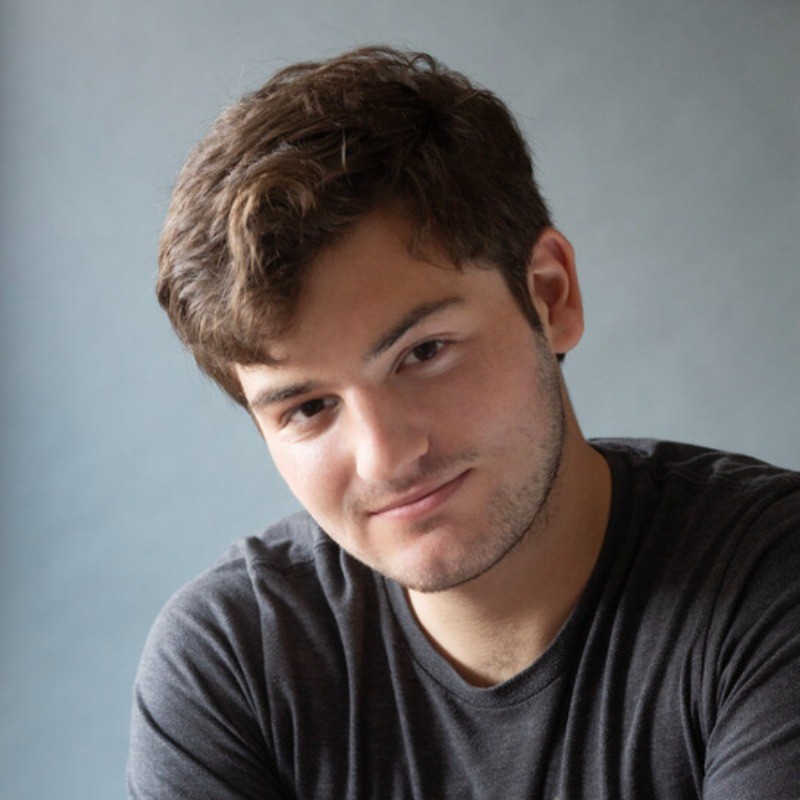
Jon Bateman, Theo Baker
Alexandra Prokopenko, a former Moscow insider who quit over the Ukraine War, says that Vladimir Putin has lost focus on running the country. She joins Jon Bateman on The World Unpacked to explain the erosion of Russia’s social contract and share stories from her new book From Sovereigns to Servants: How the War Against Ukraine Reshaped Russia’s Elite.

Jon Bateman, Alexandra Prokopenko

Nick Pickles battled bots at Twitter and is now chief policy officer at Tools for Humanity, the Sam Altman-founded startup that reads eyeballs with an Orb.
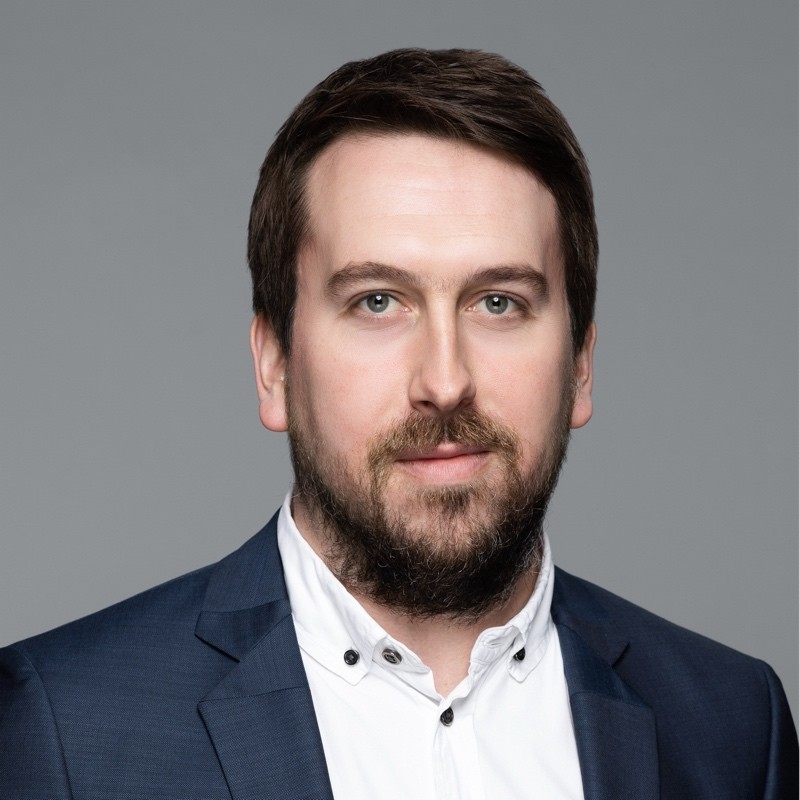
Jon Bateman, Nick Pickles