

Commentary
Mikayel Zolyan
{
  "authors": [
    "Mikayel Zolyan"
  ],
  "type": "commentary",
  "blog": "Carnegie Politika",
  "centerAffiliationAll": "",
  "centers": [
    "Carnegie Endowment for International Peace",
    "Carnegie Russia Eurasia Center"
  ],
  "collections": [
    "Aso Tavitian Initiative"
  ],
  "englishNewsletterAll": "",
  "nonEnglishNewsletterAll": "",
  "primaryCenter": "Carnegie Russia Eurasia Center",
  "programAffiliation": "",
  "regions": [
    "Armenia",
    "Caucasus",
    "Russia"
  ],
  "topics": [
    "Security",
    "Global Governance",
    "Foreign Policy"
  ]
}
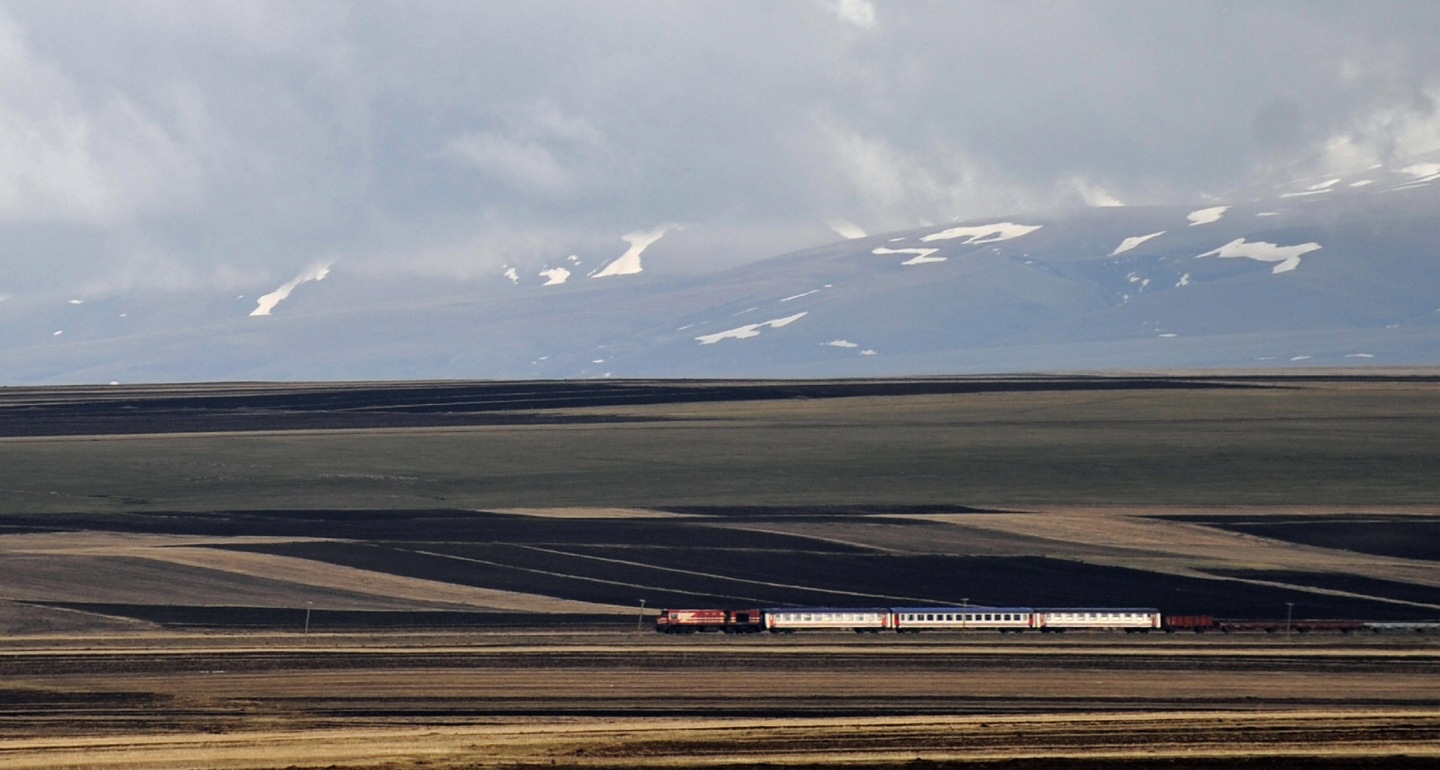
Source: Getty
Instead of a guaranteed ally, the Kremlin now perceives Armenia as yet another hybrid battlefield where it is fighting the West.
If last year the most high-profile story in the South Caucasus was the crisis in Russian-Azerbaijani relations, this year it’s tensions between Moscow and Yerevan that are taking center stage. The head of Armenia’s Security Council has said that the biggest risk the country faces in 2026 is a “hybrid threat from third countries.” Anyone familiar with Armenian political discourse knows that the main third country being referred to here is Russia.
Recent statements by Armenian Prime Minister Nikol Pashinyan about how some senior prelates in the Armenian Apostolic Church have been serving the interests of another country also refer to Russia. And the relationship with Russia was the context for the 2025 arrests in Armenia of the Armenian-Russian billionaire Samvel Karapetyan and two archbishops, Bagrat Galstanyan and Mikael Ajapahyan, who are accused of attempting a coup. The Armenian authorities refer to Karapetyan—who is the forty-forth richest person in Russia according to Forbes—as a “Russian oligarch.”
It’s also becoming more common for Armenian officials to use postcolonial discourse. Even Pashinyan has used anti-imperialist language when describing the Soviet era. At the same time, ties between Armenia and the United States are warming, and there are regular conversations about Armenia’s integration with the EU. In many ways, therefore, a major break with Russia appears imminent.
However, appearances can be deceptive. On the contrary, Yerevan is in no hurry to withdraw from the Moscow-led Collective Security Treaty Organization (CSTO), shut down Russian military bases in the country, or limit its participation in the Eurasian Economic Union.
Despite the nationalization of Armenia’s power grid (which belonged to Karapetyan), Russian state corporations—like the gas giant Gazprom and Russian Railways—continue to operate in Armenia without hindrance. Pashinyan has even said that he hopes Russian Railways will be involved in the restoration of Armenia’s rail links with Turkey and Azerbaijan. Pashinyan and other Armenian officials regularly visit Russia and meet with their Russian counterparts.
Tensions between Moscow and Yerevan tend to wax and wane. The latest scandal escalated the antagonism to an unprecedented level, and was caused by Russian TV propagandist Vladimir Solovyov when he called on the Kremlin to conduct a “special military operation” (the official Russian term for the full-scale invasion of Ukraine) in Armenia. That provoked a wave of outrage, and the Armenian Foreign Ministry summoned the Russian ambassador.
It wasn’t the first time Russian propaganda has targeted Armenia, but Solovyov’s remarks were particularly badly received. For many years, Kremlin policy toward Armenia was shaped by two things: Armenia’s conflict with Azerbaijan and Turkey, and the goodwill felt by many in Armenian society toward Russia. But all of that changed after Russia—Armenia’s official CSTO ally—failed to intervene in the Second Nagorno-Karabakh War in 2020 (in which Armenia was defeated by Azerbaijan) and the 2023 flight of ethnic Armenians from Nagorno-Karabakh.
The end of the conflict with Azerbaijan—even if it was a defeat—means Armenia can now seek to diversify its foreign policy away from Russia, including by building closer ties to the West. When added to Russia’s declining influence in the post-Soviet space as a result of its fixation on the war in Ukraine, it becomes clear how significantly the situation has changed. For Armenians, Russia is no longer an “older brother.”
If Yerevan was once concerned that tension with Moscow could affect its ability to withstand Azerbaijan, it now has a lot more room for maneuver. At the same time, the risks are increasing for Yerevan as Moscow sees the possibility of another post-Soviet republic slipping from its grasp. Instead of a guaranteed ally, the Kremlin now perceives Armenia as a hybrid battlefield where it is fighting the West. And parliamentary elections scheduled for this year offer Moscow a chance to try to land a victory.
Solovyov made his explosive remarks a few days before a U.S.-Armenian agreement on the Trump Route for International Peace and Prosperity (TRIPP) was inked in Washington on January 13. TRIPP—which includes roads and railways as well as pipelines and fiber optic cables—is to be built in Armenia’s southern Syunik region, connecting Azerbaijan to its Nakhchivan exclave.
TRIPP is due to be managed by a joint Armenian-U.S. company, which will build the transport artery and run it for forty-nine years (with the option of an extension to ninety-nine years). The United States will have a 74 percent share, and Armenia 26 percent (with the option of upping it to 49 percent). At the same time, the agreement states that Armenia will retain full sovereignty over the route, which will be governed by Armenian laws. Azerbaijanis who use it will not have to deal with Armenian border guards and customs officers—instead, it will be manned by employees of a U.S. company. Though the final decision on admission will still lie with the Armenian authorities.
For Yerevan, TRIPP’s guarantee of full Armenian sovereignty makes it preferable to the alternative: the Zangezur Corridor, which was championed by Moscow and Baku after the 2020 war.
Washington’s mediation helped the two sides find a compromise: Armenia retains sovereignty; Azerbaijan gets unimpeded access to Nakhchivan; the United States controls a route that could link Europe, Central Asia, and China; and U.S. President Donald Trump gets both a project named in his honor and the opportunity to claim he resolved another long-running conflict. The only unsatisfied parties were Iran (which is too focused on domestic issues at the moment to care) and Russia.
Moscow is clearly unwilling to accept that the end of the Armenia-Azerbaijan conflict means it has lost leverage over both Yerevan and Baku. Accordingly, the Kremlin would prefer to see a pro-Russian government in Yerevan—or at the very least, a government that wants to restart the conflict with Azerbaijan. There are such forces in Armenian politics, after all.
First and foremost, that is the parliamentary opposition associated with former Armenian presidents Robert Kocharyan and Serzh Sargsyan and the political movement Our Way, led by Narek Karapetyan (nephew of the jailed billionaire Samvel Karapetyan). These are the main political groups in support of which Moscow is almost certain to deploy its soft power (from spreading disinformation aimed at discrediting the Pashinyan government to promoting nostalgia for Soviet-era relations).
However, it seems unlikely the Kremlin will be able to achieve much with soft power alone, not least because the elections are closely tied to the fate of the peace process between Armenia and Azerbaijan. If Baku and Ankara reignite the conflict, it will empower anti-Pashinyan groups and probably force Yerevan back into Moscow’s embrace. If the peace process remains on track, though, Pashinyan’s Civil Contract party is likely to win the elections. A functioning peace process and the implementation of TRIPP will mean Moscow has far fewer ways of influencing Yerevan—and the Russia-Armenia relationship is likely to enter a new, more pragmatic era.
Former member of Armenian Parliament
Recent Work
Mikayel Zolyan
Mikayel Zolyan
Carnegie does not take institutional positions on public policy issues; the views represented herein are those of the author(s) and do not necessarily reflect the views of Carnegie, its staff, or its trustees.
Pashinyan’s pro-European party has been re-elected with a decisive victory. But the pro-Russian opposition could still slow Armenia’s progress toward peace with Azerbaijan and rapprochement with Europe.
Mikayel Zolyan
For all the menacing rhetoric, the Armenian prime minister remains a leader with whom Putin is prepared to interact: not as an ally, but as a partner, albeit a problematic one.

Alexander Atasuntsev
The issue is not that the president only has selective information at his disposal, but that the decision-making process consists of one person with an unshakeable vision of how the world works.

Tatiana Stanovaya
By fueling the arguments of both supporters and opponents of Armenian Prime Minister Nikol Pashinyan, Azerbaijan wants to ensure he is re-elected with a weaker mandate.

Bashir Kitachaev
A much-discussed disagreement over internet restrictions in Russia was never an existential threat for Putin: It was about elite groups protecting their interests.

Alexandra Prokopenko